Maths
ALGEBRA
Facts
Algebra has a lot of “wait… what?” moments once you look a bit deeper. Here are some interesting facts that are perfect for teens—some feel like magic, others like puzzles:
Algebra lets you prove things for all numbers
When you use a variable like x, you’re not solving for one number—you’re proving something works for any number.
Example: x + x = 2x
This is true for every number in the universe, not just one case.
Different expressions can mean the same thing
These look different:
(x + 2)(x + 3)
x^2 + 5x + 6
But they’re actually exactly equal.
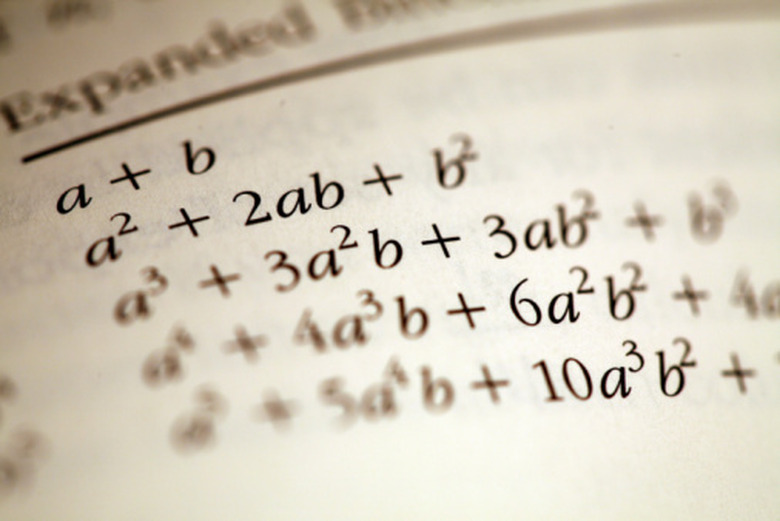
This is called expanding and factoring—like translating between two languages.
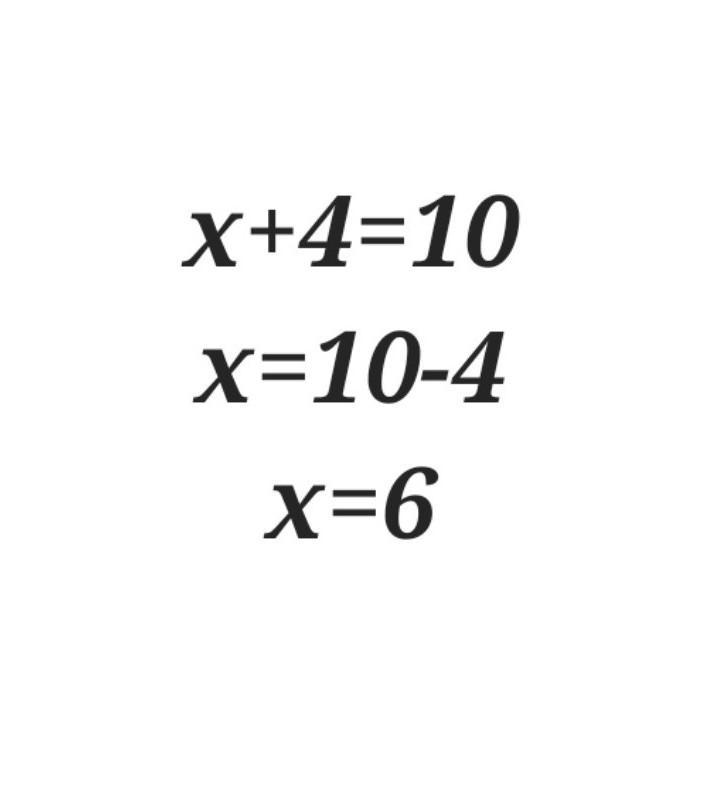
You can undo operations like a puzzle
Algebra is reversible:
+5 undo with −5
×3 undo with ÷3
That’s why equations are like balance scales—whatever you do on one side, you do on the other.
Tricks
Algebra can feel abstract, but some ideas are genuinely mind-blowing once you see them. Here’s one that’s both simple and surprisingly powerful:
The “Why does this always work?” trick
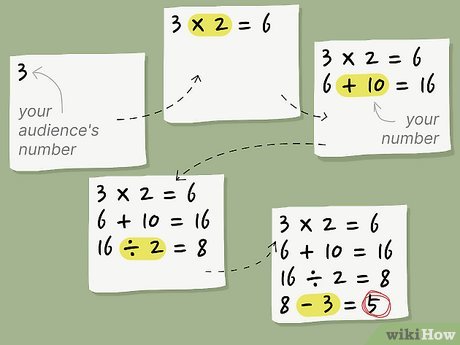
Take any number. Let’s pick something random, say 7.
Now follow these steps:
Multiply it by 2 → 7 × 2 = 14
Add 8 → 14 + 8 = 22
Divide by 2 → 22 ÷ 2 = 11
Subtract your original number → 11 − 7 = 4
You get 4, no matter what number you start with.
Why does this happen?
Let’s use algebra instead of a specific number.
Let your starting number be x.
Multiply by 2 → 2x
Add 8 → 2x + 8
Divide by 2 → (2x + 8) ÷ 2 = x + 4
Subtract original number → (x + 4) − x = 4
The x cancels out, leaving just 4.
Why this is cool
This shows one of the core ideas of algebra:
Letters like x represent any number
You can prove something works for all numbers, not just one example
GEOMETRY
Facts
The tesseract
Geometry is full of patterns that feel almost magical once you notice them. Here are some of the most interesting and sometimes surprising facts:
A shape can have infinite perimeter but small area
The Koch snowflake starts as a triangle and keeps adding smaller spikes over and over.
Its area stays finite
Its perimeter becomes infinite
So you end up with a shape that has a never-ending boundary but still fits within a limited space.
Shapes can exist in more than three dimensions
We live in 3D, but geometry works in higher dimensions too.
A tesseract is the four-dimensional (4D) version of a cube. You can’t fully visualize it, but you can see projections of it—like a cube inside another cube connected by edges.
This is similar to how:
A 3D object casts a 2D shadow
A 4D object would cast a 3D “shadow”
The shortest path isn’t always “straight”
On Earth, airplanes don’t follow straight lines on flat maps.
That’s because the shortest path on a curved surface comes from Non-Euclidean geometry.
So what counts as a “straight line” depends on the surface you’re on.